
Newsletter
Newsletter
Rapid Response Report
Monthly Industry News for EMS Professionals
Houston Trains the Next EMS Generation
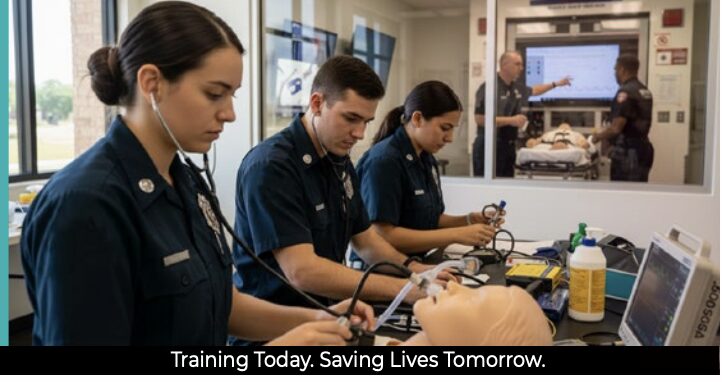
Houston’s continuing population growth is creating another challenge for the region’s emergency medical system: making sure there are enough qualified professionals available to answer the call. Houston City College’s Emergency Medical Services program is responding by expanding the local pipeline of EMTs and paramedics entering the profession.
The program recently received statewide recognition, ranking No. 1 among Texas EMS education programs while reporting a 99% National Registry examination pass rate. HCC says its program is designed to give students a practical route into emergency medicine, beginning with EMT-Basic before progressing to Advanced EMT and paramedic education.
The approach is particularly relevant to Houston because students do not necessarily have to wait years before entering the workforce. Each level represents a potential employment opportunity, allowing students to begin working while continuing their education. For an industry facing persistent recruitment and retention problems, that kind of stackable education model could become increasingly important.
There is also a broader message for EMS leaders. Building a sustainable workforce cannot depend entirely on recruiting experienced providers from other agencies. Communities need to develop their own pipeline of EMTs and paramedics, and that means stronger partnerships among colleges, EMS agencies, fire departments, hospitals and local government.
Houston Names a New EMS Physician Director
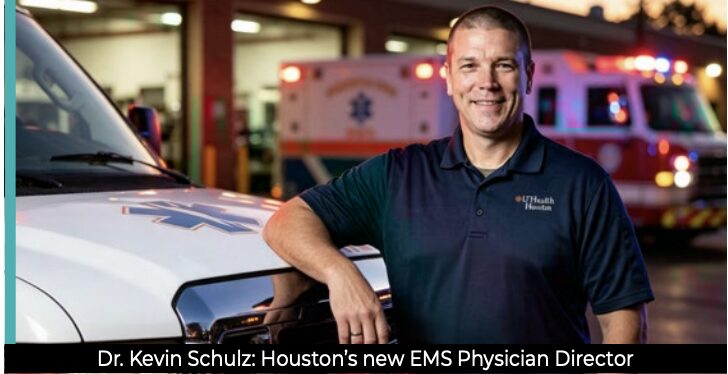
Houston’s emergency medical system has entered a new chapter with the appointment of Dr. Kevin Schulz as the city’s next EMS Physician Director. Schulz, an emergency physician and EMS specialist affiliated with McGovern Medical School at UTHealth Houston, brings extensive experience in prehospital and disaster medicine to the position.
His background includes leadership as EMS Fellowship Director and co-chief of the Section of Prehospital and Disaster Medicine. That combination of clinical experience, education and EMS specialization is particularly significant in a city whose emergency response system must operate across a large and diverse metropolitan area.
Medical directors play a role that extends far beyond approving protocols. They help shape clinical standards, quality improvement, education, provider development and the relationship between field providers and the wider healthcare system. In a modern EMS environment, medical direction increasingly has to keep pace with innovations such as prehospital blood, new cardiac and trauma practices, alternative destinations and technology-assisted clinical decision making.
For Houston providers, the leadership change will be worth watching. A large urban EMS system presents unique challenges involving call volume, hospital capacity, response deployment and complex medical emergencies. Strong medical leadership can help ensure that clinical innovation translates into practical field care rather than remaining confined to academic discussions.
Texas invests $62.5M Lifeline for Rural EMS
Texas is putting significant money behind one of the most basic requirements of emergency medicine: having a reliable ambulance available when someone calls 911. As of August 1, the Texas Comptroller reported that 145 rural ambulance grants totaling $62.5 million had been awarded for fiscal year 2026.
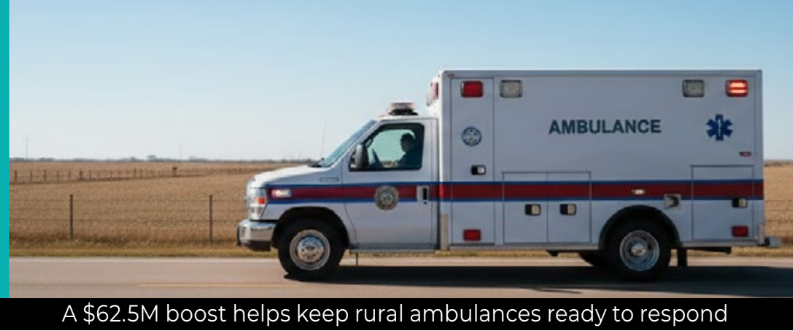
The funding is designed to help eligible rural counties purchase ambulances as well as necessary equipment, accessories and vehicle modifications. While the numbers are impressive, the importance of the program becomes clearer when viewed from the perspective of communities where an ambulance may have to travel many miles before reaching a patient.
Rural EMS systems frequently operate with fewer personnel, fewer vehicles and longer transport distances than their urban counterparts. An aging ambulance can become more than an inconvenience it can threaten coverage. When one vehicle is out of service, another unit may have to cover a much larger area, potentially increasing response times.
The Texas investment also demonstrates why EMS funding cannot be viewed solely through the lens of reimbursement for individual patient transports. Ambulances represent community infrastructure. They have to be maintained, staffed, equipped and ready before the emergency happens. For rural Texas, this funding could help strengthen that readiness for years to come.
Killeen Fire EMS Brings Whole Blood to the Ambulance

A growing number of EMS agencies are moving blood transfusion out of the hospital and into the ambulance, and Killeen Fire EMS has now joined that movement. The department began carrying whole blood on its ambulances, allowing specially trained paramedics to administer transfusions before a severely injured patient reaches a trauma center.
The program is particularly significant because Killeen Fire EMS is reported to be the first fire-based EMS agency between Dallas and San Antonio to offer prehospital blood transfusion. For trauma patients suffering catastrophic hemorrhage, those minutes between the scene and the hospital can be critical.
Whole blood differs from traditional IV fluids because it replaces multiple components lost during major hemorrhage. Red blood cells support oxygen delivery while platelets and clotting proteins contribute to the body’s ability to control bleeding. The program therefore represents more than simply adding another medication or piece of equipment to an ambulance, it represents bringing a hospital-level intervention into the prehospital environment.
Killeen’s program also highlights the logistical side of advanced EMS medicine. Blood must be stored under controlled conditions, monitored continuously and rotated so that products do not expire unnecessarily. The department has partnered with Baylor Scott & White to manage its blood supply. As other Texas agencies consider similar programs, Killeen could provide a useful model for combining clinical capability with the operational infrastructure necessary to sustain it.
Rural EMS Gets a New Staffing Option in Illinois
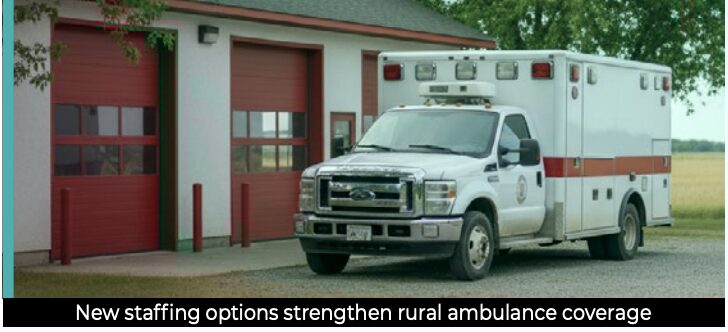
Rural EMS agencies across the country continue to struggle with staffing enough qualified personnel to maintain reliable ambulance coverage. A new Illinois law aims to ease that pressure by giving rural ambulance services more flexibility to use part-time and on-call EMTs and paramedics, particularly when call volumes rise.
For smaller communities, flexible staffing can make a significant difference. Rural agencies often cover large geographic areas with limited personnel, making it difficult to maintain full-time crews around the clock. Expanding staffing options could help agencies keep ambulances in service without requiring every provider to work a traditional full-time schedule.
Illinois’ approach reflects a broader challenge facing rural EMS nationwide. As volunteer numbers decline and recruitment becomes harder, agencies may need to rethink traditional staffing models while still maintaining strong standards for training, competency and patient care. Flexible scheduling could also help agencies attract experienced providers who cannot commit to full time work. It may provide agencies with a larger pool of qualified personnel during busy periods or staffing shortages.