
Newsletter
Newsletter
Rapid Response Report
Monthly Industry News for EMS Professionals
Preparing EMS for the 2026 FIFA World Cup in Texas

Texas’ EMS and public health officials are already preparing
for the crowds that will descend on the state for the
2026 FIFA World Cup, when matches will be played in Dallas
and Houston. As Texas gets ready to host several games
during the tournament, state agencies are stepping up
emergency preparedness plans for large public events.
Officials are collaborating with local, state and federal partners
to identify potential public health threats and emergency
response challenges. Planning is underway on disease
surveillance, medical supply coordination, strategic deployment
of emergency resources and mass casualty preparedness.
EMS systems are under a lot of pressure during large international
events. Call volume increases, traffic becomes congested and
there is a need for quick coordination between multiple agencies.”
“We must have advanced preparation to sustain our response
capabilities throughout the tournament,” EMS leaders said.
The World Cup may be one of the biggest operational challenges
for EMS providers in Texas in recent history. In the months
preceding the event, agencies will need to participate in a wide
variety of drills and interagency exercises
EMS Week 2026: “Improving Outcomes, Together”

EMS Week 2026 highlights the teamwork behind the
wheels of emergency medical services. The theme for
this year is “Improving Outcomes, Together,” and it focuses
on collaboration between EMS, hospitals, public health
agencies, fire departments, and law enforcement. In Texas
and across the country, agencies are using EMS Week not
only to recognize providers, but to educate communities
about the growing role of modern EMS.
The expansion of pre-hospital blood transfusion programs
is one of the biggest talking points this year. EMS agencies
are increasingly carrying blood products on ambulances
and helicopters, allowing paramedics to begin life-saving
treatment before patients arrive at trauma centers. Industry
leaders say the intervention is already improving survival
rates for patients with serious trauma.
EMS Week also focuses on the importance of provider wellness,
resilience and continuing education. Theme days throughout
the week highlight safety, EMS for children, CPR awareness and
recognition of EMS professionals who continue to serve under
increasing call volumes and staffing shortages.
For many EMS professionals, the week is a reminder of how quickly the profession is still changing. Today, EMS providers are more integrated into the overall healthcare system than ever before, with advanced technology and expanded patient care roles.
Texas Expands Ambulance Whole Blood Programs

Today’s EMS personnel bring cutting-edge skills and innovation directly to the field, often making a crucial impact before a patient even arrives at the hospital. These talents range from early stroke recognition and prehospital ultrasound to whole-blood transfusions and shifting models of care.
Communities throughout will honor the commitment, bravery, and empathy of EMTs, paramedics, dispatchers, and emergency medical teams that work on the front lines every day during EMS Week 2026 (May 17–23).
It’s an opportunity to commemorate the individuals behind the patch and reaffirm a common commitment to improving results together.
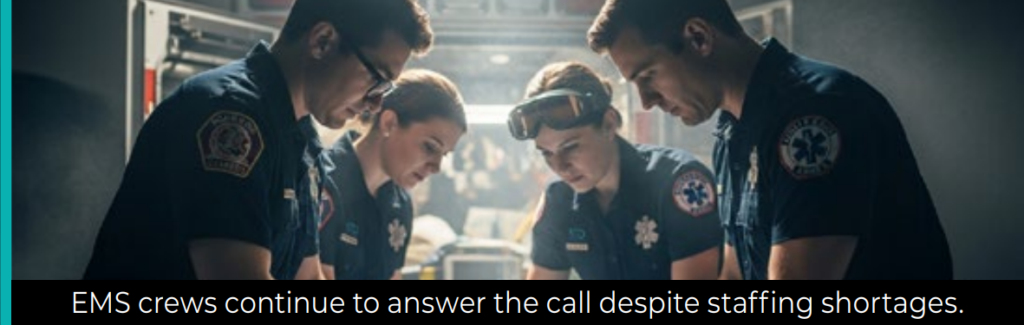
Texas EMS Staffing Challenges Continue
Following a carbon monoxide incident on a boat at MacMillan Pier in Provincetown on February 26, eight individuals received treatment at Cape Cod Hospital. Just before 6 p.m., police discovered two people unconscious, and emergency responders promptly removed them. The responses were also assessed because of the possible risk of exposure.
A Mass Casualty Incident was declared because there were more patients than ambulances available, and nearby towns Truro, Wellfleet, and Eastham provided further assistance.