
Newsletter
Newsletter
Rapid Response Report
Monthly Industry News for EMS Professionals
EMS GOES PINK Preparing for Breast Cancer Awareness Month
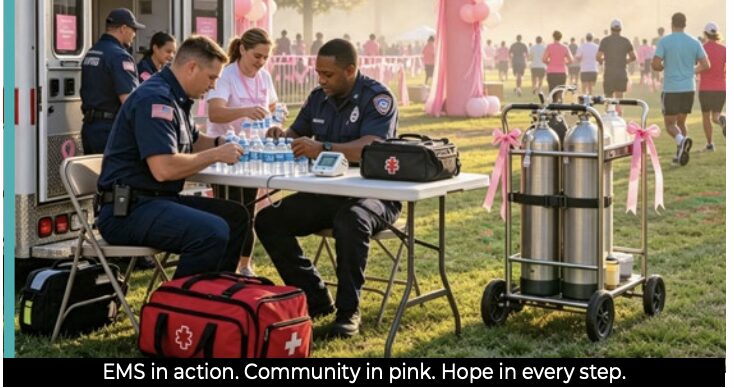
October’s Breast Cancer Awareness Month campaign is about to take over communities across the country, and Houston will be among the cities hosting a major public awareness event. The 2026 Komen Houston Race for the Cure is scheduled for October 3 at Sam Houston Park, bringing together survivors, families, volunteers and community members to raise awareness and funds supporting breast cancer research and assistance programs.
The Houston event is expected to draw thousands of participants. According to the event’s official page, more than 3,000 people had already registered as of late September, with an overall fundraising goal of more than $1 million. The event includes a Survivor Parade, opening ceremony and 5K, making medical preparedness and emergency planning an important part of the event’s overall organization.
Event volunteers are involved in preparing the site and supporting participants along the route. Official event safety instructions direct participants to call 911 in an emergency and then notify event personnel. That simple instruction reflects an important part of large community events: organizers and volunteers must know how to connect participants with professional emergency assistance when something goes wrong.
For EMS professionals, Breast Cancer Awareness Month also provides an opportunity to participate in community education beyond traditional emergency response. Wearing a pink ribbon, incorporating pink into uniforms or supporting community events can help create visibility for a cause that affects patients, survivors, families and healthcare professionals alike. October is therefore not only a month for awareness — it is also an opportunity for the EMS community to demonstrate its role as a visible and engaged part of public health.
Harris County Dispatch Center Earns National Recognition
When an emergency call comes into 911, the first emergency professional a patient encounters may not be a paramedic or EMT. It may be the dispatcher on the other end of the phone. In Harris County, an emergency communications center has received national recognition for the quality of the work taking place behind those calls. Harris County Emergency Services District 11’s 911 Emergency Communications Center, known as “Control,” was recognized in August as an Accredited Center of Excellence by the International Academies of Emergency Dispatch. The designation recognizes emergency dispatch centers that demonstrate a sustained commitment to quality assurance, professional development and standardized emergency communications.
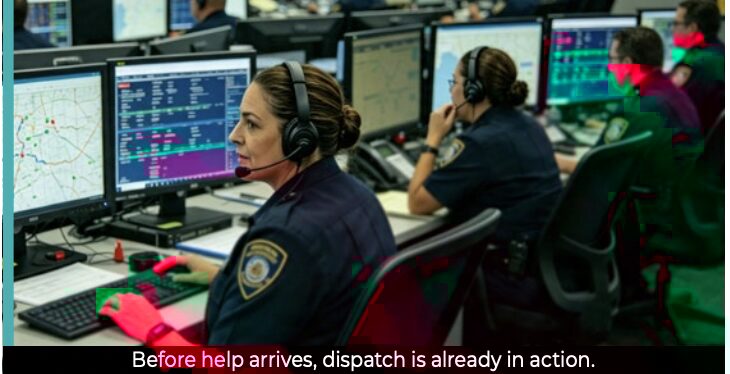
For dispatchers, the responsibility goes well beyond simply sending an ambulance to an address. They must quickly determine what is happening, identify the appropriate resources and communicate critical information to responding crews. In some emergencies, dispatchers can also provide lifesaving instructions while EMS personnel are still traveling to the scene.
The recognition highlights an often-overlooked part of the EMS chain: emergency care begins before the ambulance arrives. The person answering the phone may be the first professional guiding a family through the most stressful moments of an emergency. For communities, effective dispatch can mean getting the right resources moving while helping callers take important steps before responders arrive.
Houston’s New Mental Health Response
Not every 911 call requires the same type of emergency response. A person experiencing a life-threatening medical emergency may need an ambulance immediately, while someone experiencing a non-emergency behavioral health crisis may require a different type of intervention.
Houston has developed a Crisis Call Diversion program designed to identify certain non-emergency mental health-related calls and connect callers with mental health professionals rather than automatically sending traditional emergency responders. The program operates through coordination among the city’s emergency communications system, police, fire/EMS and mental health services.
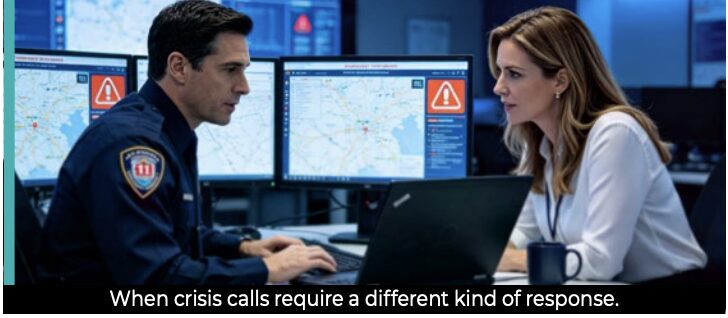
The goal is not to eliminate EMS involvement when it is needed. Instead, trained crisis counselors can assess calls and determine whether a situation requires an emergency medical or law-enforcement response or whether the caller may be safely connected with appropriate mental health resources.
For EMS systems, models like this raise an important question about how emergency resources should be matched to individual needs. When the situation permits, diverting appropriate non-emergency calls can allow ambulances and other first responders to remain available for patients facing immediate medical threats. It also demonstrates the increasingly interconnected role of EMS, behavioral health professionals, dispatchers and community services in responding to complex 911 calls.
EMS Takes Flight
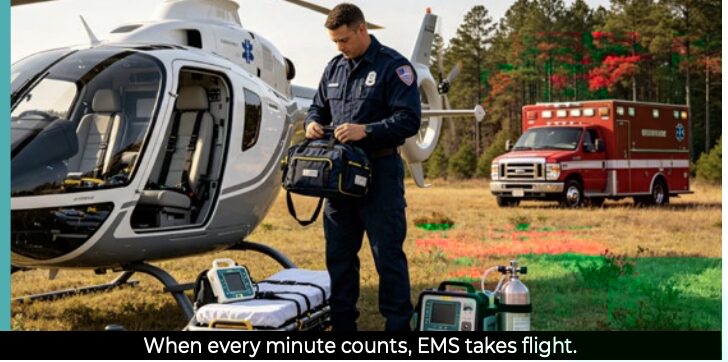
Arural North Carolina EMS system is testing a new approach to one of emergency medicine’s oldest challenges: distance. Hyde County EMS has begun using an electric vertical takeoff and landing aircraft, or eVTOL, to bring a specially trained paramedic directly to emergency scenes.
During two early live 911 responses, the flight-trained paramedic reportedly reached one patient approximately 20 minutes before a ground ambulance and began advanced life support while other responders were still traveling to the scene. The program followed months of preparation and more than 300 training flights.
The concept is particularly relevant in rural communities where rivers, large distances, limited roads and other geographic barriers can make ground response slower. Instead of replacing ambulances, the aircraft is being used as another way to get an advanced medical provider to the patient sooner.
The experiment represents an emerging area of EMS innovation. A flight-trained paramedic can carry essential equipment, land near the emergency and begin assessment and treatment while ground crews continue responding. Whether this approach becomes practical on a larger scale will depend on factors such as training, weather, regulations, aircraft performance, cost and the ability to integrate aviation safely into existing EMS systems.
EAST TEXAS EXPANDS ACCESS TO WHOLE BLOOD
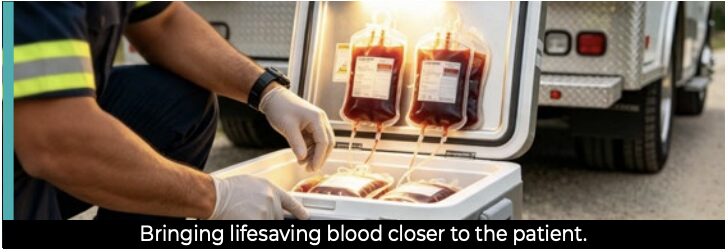
The expansion of prehospital whole-blood programs is continuing across Texas. In East Texas, EMS supervisor vehicles have been equipped with specialized blood coolers, increasing the ability of trained personnel to carry whole blood closer to patients experiencing lifethreatening emergencies.
The program allows specially trained EMS personnel to transport and administer whole blood in the field. The goal is to shorten the time between a serious injury and the beginning of treatment, particularly for patients suffering severe blood loss.
For EMS agencies, however, introducing whole blood into field operations requires more than simply carrying a cooler. Programs require specialized equipment, training, temperature monitoring, inventory procedures and coordination with medical direction and receiving hospitals. Those systems must work together to ensure that blood remains available and safe when a critical patient needs it.
The expansion represents a broader change in the role of EMS. Ambulances are increasingly becoming mobile treatment environments rather than simply transportation vehicles. As technology, training and medical protocols advance, field providers are able to begin sophisticated treatment earlier — potentially narrowing the gap between the emergency scene and the hospital.