
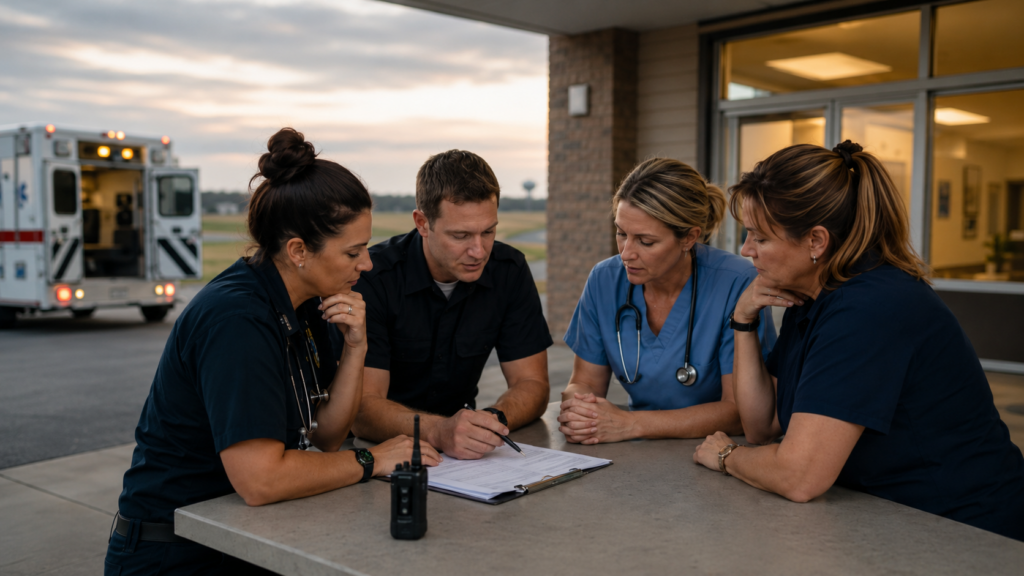
Rural EMS providers and small healthcare facilities do not have the luxury of endless backup staff. In a larger hospital, one absence may be absorbed by a float pool, overtime, or another department. In a small facility or rural EMS operation, one missing EMT, paramedic, nurse, or medical support worker can threaten the entire schedule.
This topic is aligned to StaffDash only when it stays honest: StaffDash provides EMS staffing, ambulance staffing, emergency room staffing, medical staff services, and clinician/non-clinician staffing support. The blog should not pretend StaffDash is a rural health policy agency. The angle is staffing coverage planning for smaller teams that cannot afford fragile coverage.
Why Rural and Small Facility Staffing Breaks Faster?
A small facility can have excellent people and still have a fragile staffing model. The problem is not always poor management. The problem is math. Fewer available local candidates, longer travel distances, limited specialty backup, and tighter budgets mean every absence matters more.
The HRSA rural health resources highlight the unique needs of rural communities. The Rural Health Information Hub EMS topic page also recognizes EMS access and workforce challenges as key rural healthcare issues. For staffing content, this gives StaffDash a legitimate context: rural and smaller facilities need practical workforce plans, not generic recruiting slogans.
The Small-Team Coverage Problem
The most dangerous staffing issue for a small team is not always a dramatic resignation. It is the quiet stacking of small gaps: one person out sick, one certification expiring, one overtime pattern becoming normal, one transfer schedule stretching the ambulance team, one ER shift becoming harder to fill. By the time leaders notice the pattern, morale is already damaged.
StaffDash’s ambulance staffing services and MICU/ALS ambulance staffing pages support this topic because rural and smaller providers may need the right EMS or ambulance staff matched to the right level of coverage.
Coverage Planning Framework for Rural EMS and Small Facilities
1. Identify mission-critical roles
List the roles that cannot be left uncovered: EMTs, paramedics, ambulance crew members, ER nurses, medical staff, and essential administrative support.
2. Map minimum safe coverage
Define the minimum staffing needed for each shift, route, department, or service line before overtime becomes the default fix.
3. Track single-point failures
Flag roles where only one or two people know the workflow, hold the credential, or cover the shift.
4. Build a backup staffing pathway
Know when to use per diem, contract, temporary, or direct hire support instead of waiting for panic hiring.
5. Include transport and transfer demand
Small facilities often feel pressure from transfers, ambulance availability, and patient movement, not only on-site care.
6. Review credential timelines
Do not wait until a license, registry, or onboarding requirement becomes a barrier to coverage.
7. Protect core staff from permanent overtime
Overtime can be a short-term bridge. It is a long-term burnout strategy when it becomes normal.
Where Remote RN Support May Fit?
Remote RN support is not a fix for every rural staffing issue. It cannot replace hands-on emergency coverage, ambulance crews, or on-site medical response. But StaffDash’s Remote U.S. Licensed RNs services may support certain workflows such as telephone triage, care coordination, utilization review, prior authorization, remote patient monitoring, and documentation support when the facility has proper governance.
That distinction matters. A misleading blog would imply remote RNs solve rural EMS coverage. They do not. A strong blog explains where remote support helps and where on-site EMS or medical staffing remains non-negotiable.
How StaffDash Supports Rural and Small Facility Staffing Planning?
StaffDash can help smaller healthcare organizations think through role requirements, candidate fit, EMS coverage, ambulance support, medical staff coverage, and clinician/non-clinician needs. This is where emergency rooms staffing becomes relevant: small hospitals and emergency departments often need flexible coverage before patient volume, transfers, or staff absences break the schedule.
The EMS.gov national EMS resource is also a useful authority reference for EMS system context. StaffDash should use this blog to educate leaders on staffing planning, not to exaggerate. The promise should be practical: review coverage, identify weak points, and discuss staffing support before the gap becomes urgent.
FAQs
What is rural EMS staffing?
Rural EMS staffing focuses on covering EMT, paramedic, ambulance, and emergency medical roles in areas where local workforce availability may be limited.
Why are small facilities more vulnerable to staffing gaps?
Small facilities usually have fewer backup staff, smaller talent pools, and less schedule flexibility, so one absence can create a larger operational problem.
Can remote RNs replace rural EMS staff?
No. Remote RNs may support triage, documentation, or coordination workflows, but they do not replace hands-on EMS, ambulance, or emergency response coverage.
When should a small facility use temporary healthcare staffing?
Temporary staffing may help when absences, seasonal demand, transfer volume, or hiring delays create coverage risk that internal staff cannot absorb safely.
How can StaffDash help rural or small facilities?
StaffDash can help review staffing needs across EMS, ambulance, ER, medical staff, clinician, non-clinician, and remote RN support options.
If one absence can destabilize your EMS or small facility schedule, the coverage model is too fragile. Contact StaffDash to discuss staffing support before the next gap becomes urgent.